ATTENTION. LONG POST ALERT.
Reproduced with kind permission from my little one. A speech she had prepared when in Year 11. Alright then. Not so little, little one and not so kind permission was granted. Here goes.
“How many of you have grown up having had fairy tales read to you at bedtime? Tales of once upon a time, happily ever afters, of needy princesses and dominant princes, but of course at that age, you would not have given that a second thought. On the contrary, you would have oohed and aahed at the sheer romanticism of it all. And to top it all, Disney’s earlier princesses would have reinforced this.
Now, as older women, adults, let’s revisit those characters.
Since the 1930’s, children have connected with the characters in Disney films. Disney’s princesses have, over time, reflected society’s image of women. However, the recent princesses have evolved to being more inspirational, empowering role models for young women. Disney’s pretty princesses no longer sit around, sing, do housework, tolerate abuse from step moms, beasts, and wait to be rescued by princes whom they fall head over heels for in a day. They now seek to inspire and empower, teaching us to be accepting of multiple cultures and races, while imparting valuable lessons in love and dreams.
The earliest princesses we know, Snow White, Cinderella, and Aurora were, I believe, not great role models. They were all rosy-cheeked, pale skinned women with slight frames, nothing wrong with that. They cooked, they cleaned, they sang and they all talked to furry little critters that pranced in the woods and in their houses. Nothing wrong with that either. They also had bitter, uglier women who wanted to undermine the princesses’ successes s just because of their beauty.
“Snow White,” “Cinderella” and “Sleeping Beauty” reflected a time in society (1930’s-1950’s) when men and women had to conform to strict gender roles. Men were expected to be the family bread winners, while women played stereotypical anorexic housewives who could effortlessly juggle motherhood, have spotless homes, all creatures of nature fed and sung to, and having hot meals ready for their husbands’ return. Note that all three princesses knew how to cook and clean, they never complained, they were always smiling and looking gorgeous. All fantastic, you may think, but unrealistic.
Now, all three also waited around for a prince to rescue them from the life they knew. Snow White and Aurora actually fell asleep and waited for a kiss of a prince to wake them up. Cinderella accepted without question abuse, performed menial chores and needed to marry a prince to escape her tyrants. As children, we only saw these princesses as lovely and magical. But as older women, let’s see them as they really are.
Princesses – whose reliance on men make it seem that women’s lives are only made better when a man enters it. Now, don’t get me wrong, there is nothing wrong with an epic love story. What is not right is when the heroine gets the notion that she is not her own person, or is incomplete without a hero.
As society’s norms evolved, thinking princesses like Ariel, Jasmine, Belle, Pocahontas and Mulan remade the Disney princess brand. These heroines were presented as loyal to their family, kingdom, country, questioned social norms and went on adventures outside of their personal sphere. Ariel was a dreamer and loved to explore. Jasmine and Belle stood for substance over beauty when it came to love and dreamed of traveling the world. Pocahontas and Mulan were selfless heroines who risked their own lives to save the people they cared for.
Disney’s princesses had now evolved to a point where a woman could be empowered with education, exploring and being adventurous. However, Ariel still had to change her body image, stop talking to get her prince, Jasmine had to marry a man of her dad’s choice, Belle withstood abuse and fell in love with her kidnapper, a classic case of Stockholm’s Syndrome, while Milan had to dress like a man to save her country.
Disney’s current decade of princesses, Tiana, Rapunzel, Merida, Anna, Elsa, Elena of Avalor and Moana are excellent role models for our generation.Their stories reflect female independence, different body types, different cultures, and these princesses are courageous, risking their lives for the people they love.
Tiana set many standards and firsts, she was Disney’s first black princess, she was not looking for a relationship, She set goals to open her own restaurant and believed that hard work helps make dreams happen.
Disney got rid of the idea of love at first sight with Rapunzel’s and Tiana’s stories. The girls only fell in love after investing time to get to know their “prince”.
Disney took this one step further by showing how horribly wrong, falling hard and fast in love, can go, with Anna and Prince Han’s relationship in “Frozen”.
Disney also replaced true love’s kiss with a more realistic “act of true love”. Anna and Elsa teach a lesson that sometimes, sisters are more important than misters.
And further ground breakers are assertive, fiercely independent princesses Queen Elsa, Merida and the new princess, Elena of Avalor who boldly made decisions to lead their people without marrying.
Merida is wonderful for our generation of anorexic, bulimic, self obsessed women. She is the first Disney princess with a realistic female form. Her hair is unruly, her waist is not ridiculously tiny, she even rejects a corset. So Disney princesses are now telling girls to be proud of their images and to not compare their beauty to the slight unrealistic forms of the original princesses or in the real world, models and mannequins.
Moana, Disney’s latest heroine, is the most successful princess by far, in terms of the message she sends to young women. She is young, and has an untainted natural curiosity of the outside world. The islander princess travels with the Demigod Maui to return a magical stone that will save her people. She travels the sea with a male companion and without the talk of romance and marriage. Her body type reflects a 14-year-old’s and is toned as one who spends the day swimming and walking the island, should be. She is also single minded in her pursuit of her goal, fearlessly reprimanding the Demi God when he does wrong. A role model for our times.
So, when you have to one day, retell these stories to your little sisters, cousins, daughters, students, retell them, but add a positive feminist spin to them, tell tales of go getters, inventors, visionaries, women of strength and bravery, women who don’t sit around helpless, waiting for someone to rescue them, but women who are confident, women who believe in themselves, who are proud of themselves and their images, women who want to make a difference in today’s world, to do good, women who forge their own destinies, women who are comfortable being with or without a prince.
Talk about Moana, and real life princesses like Michelle Obama, princess Diana, Marie Curie, Beyoncé, Helen Keller, Anne Frank, and yes, why not yourselves? And hopefully, your listeners will be rightfully inspired”.
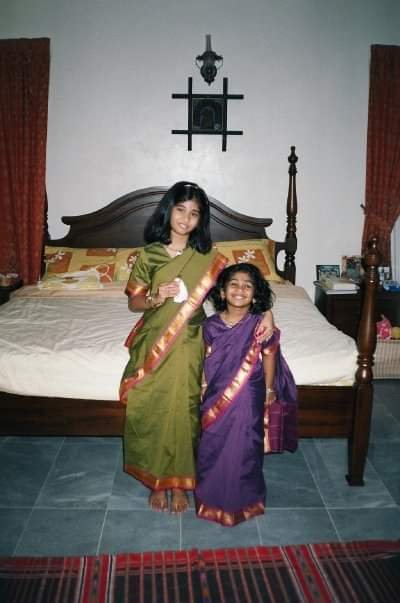
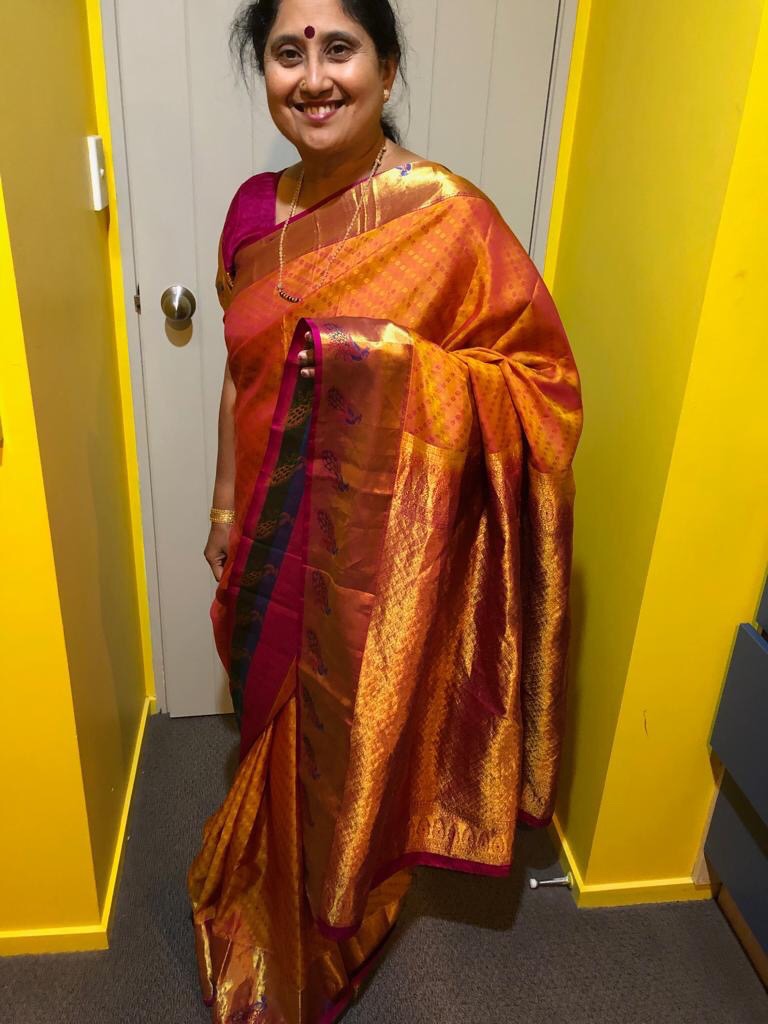
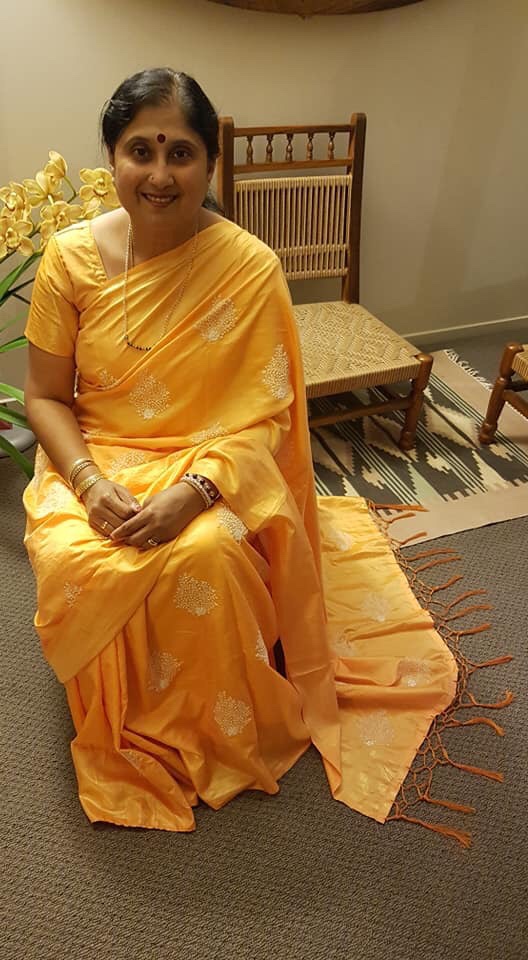
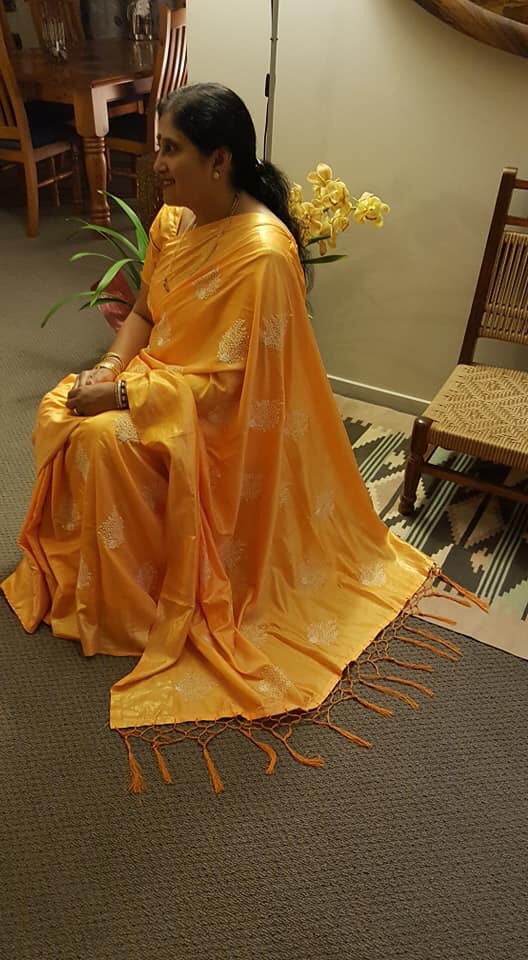
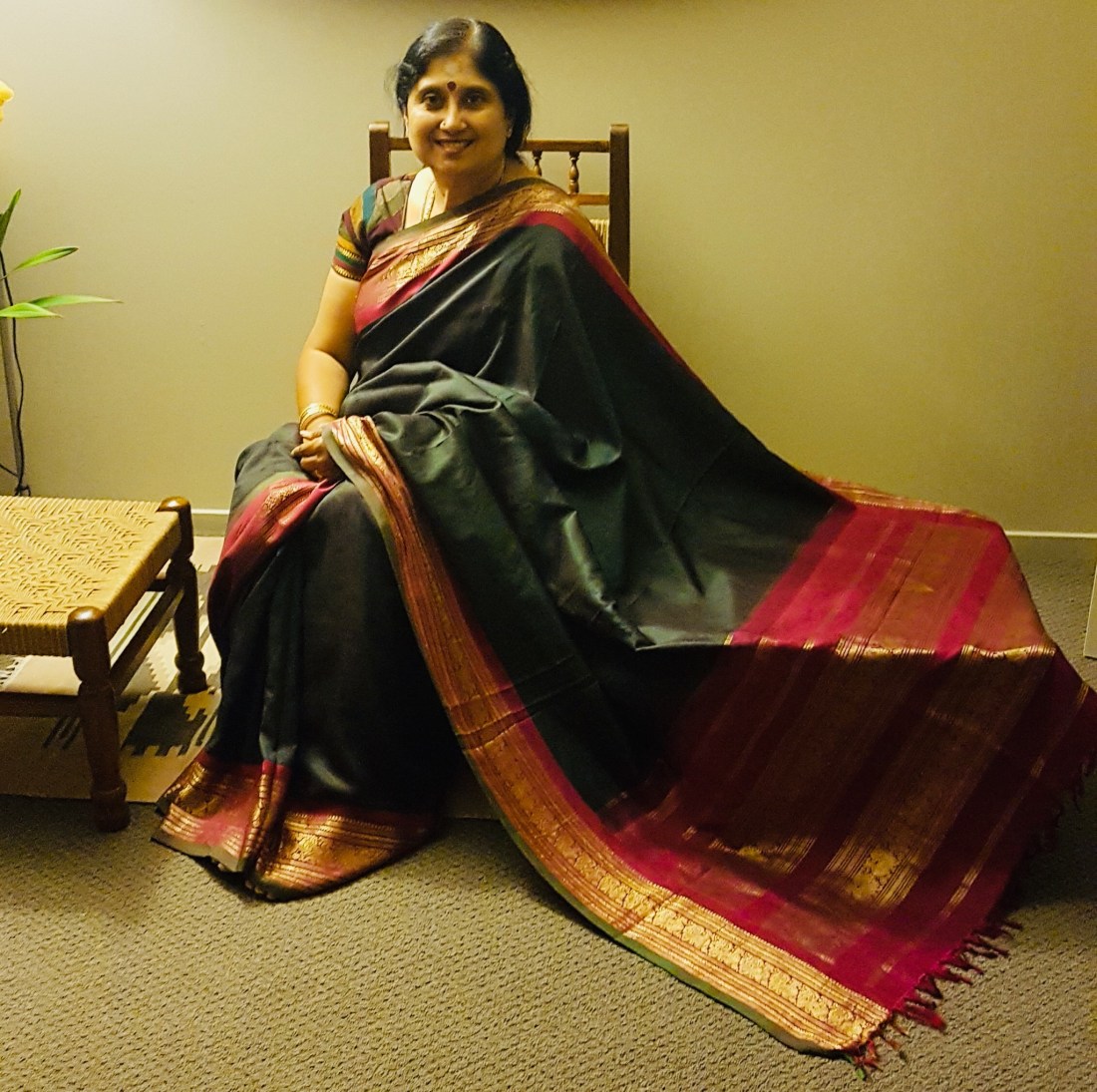
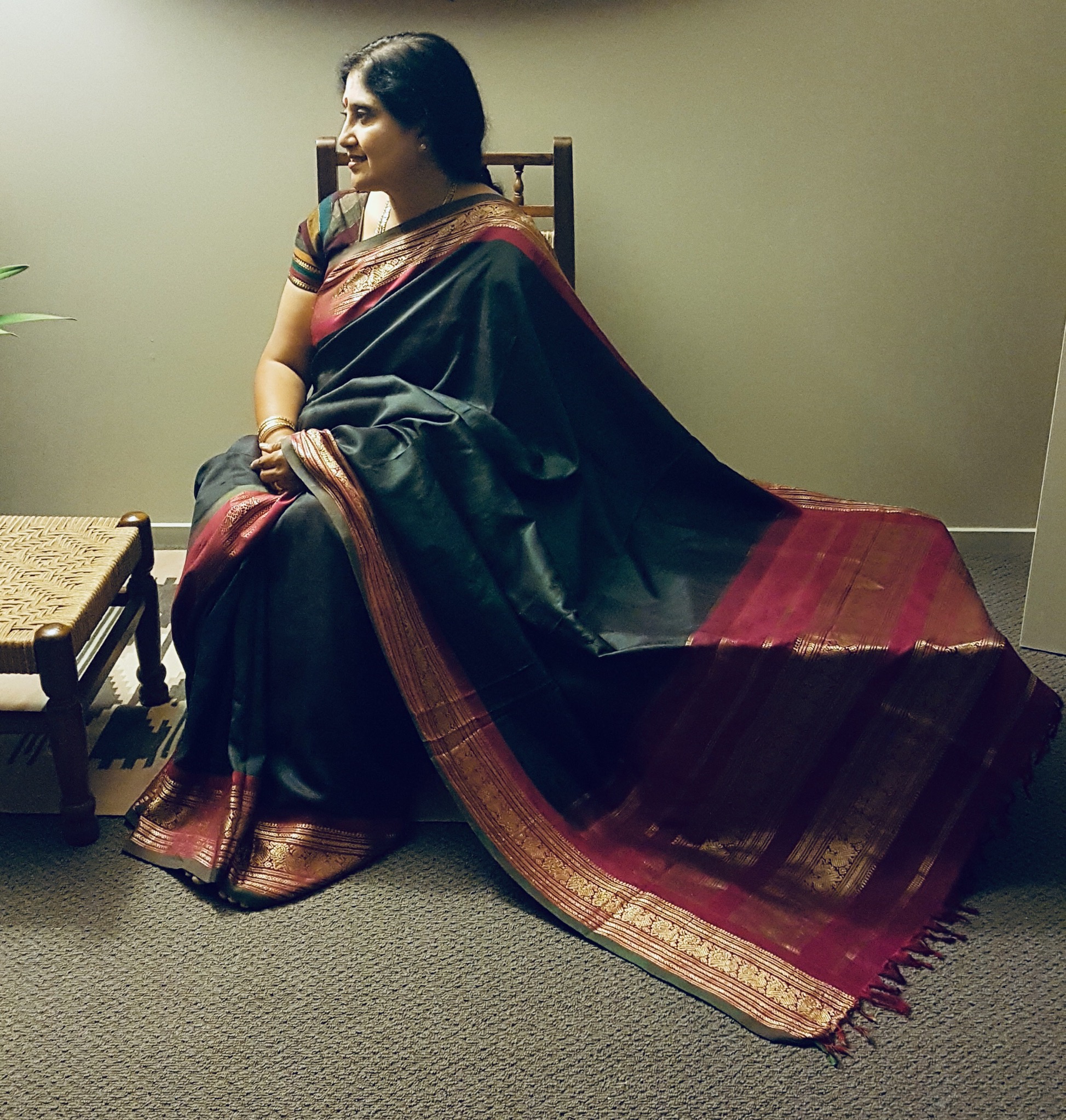
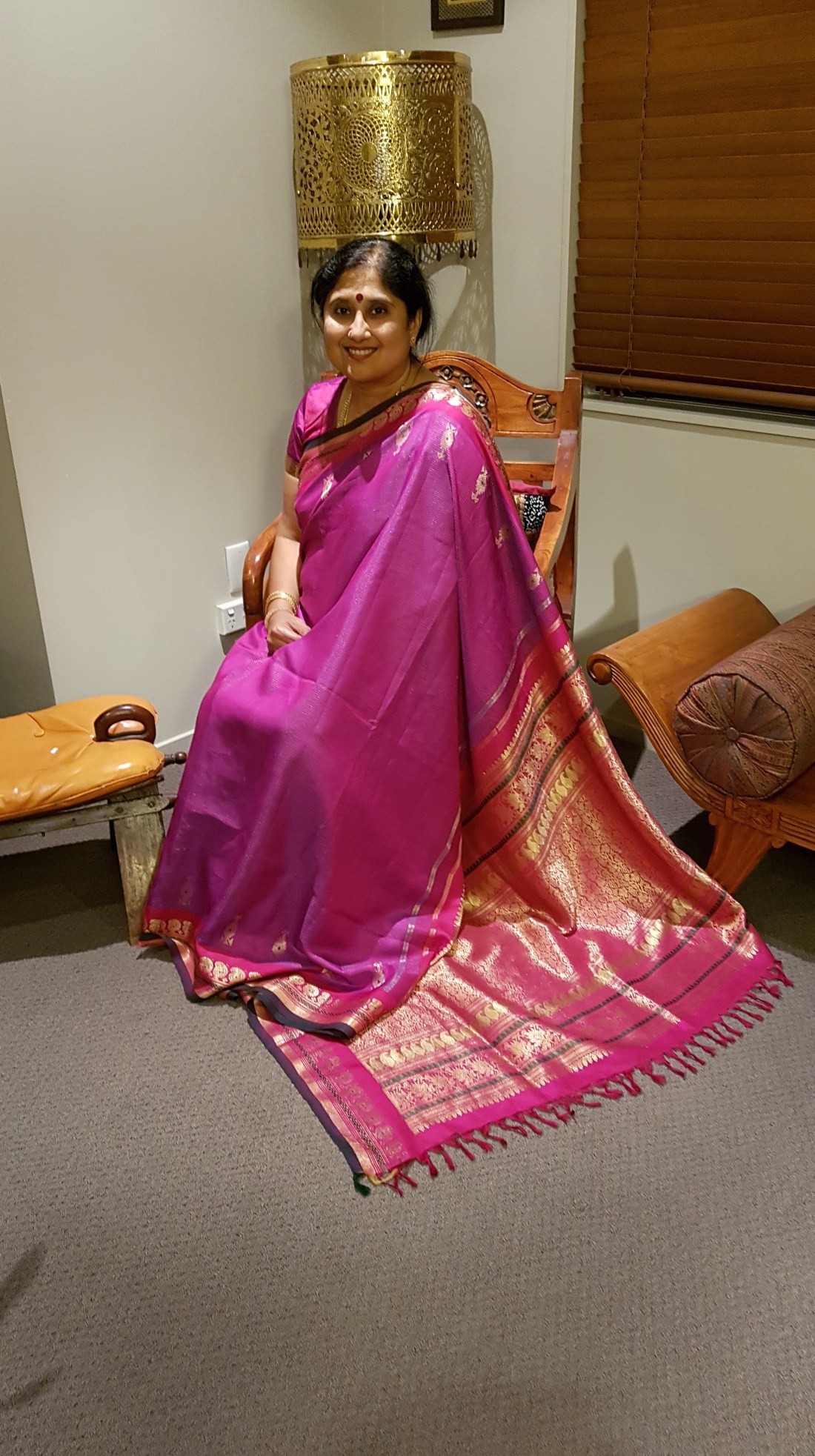
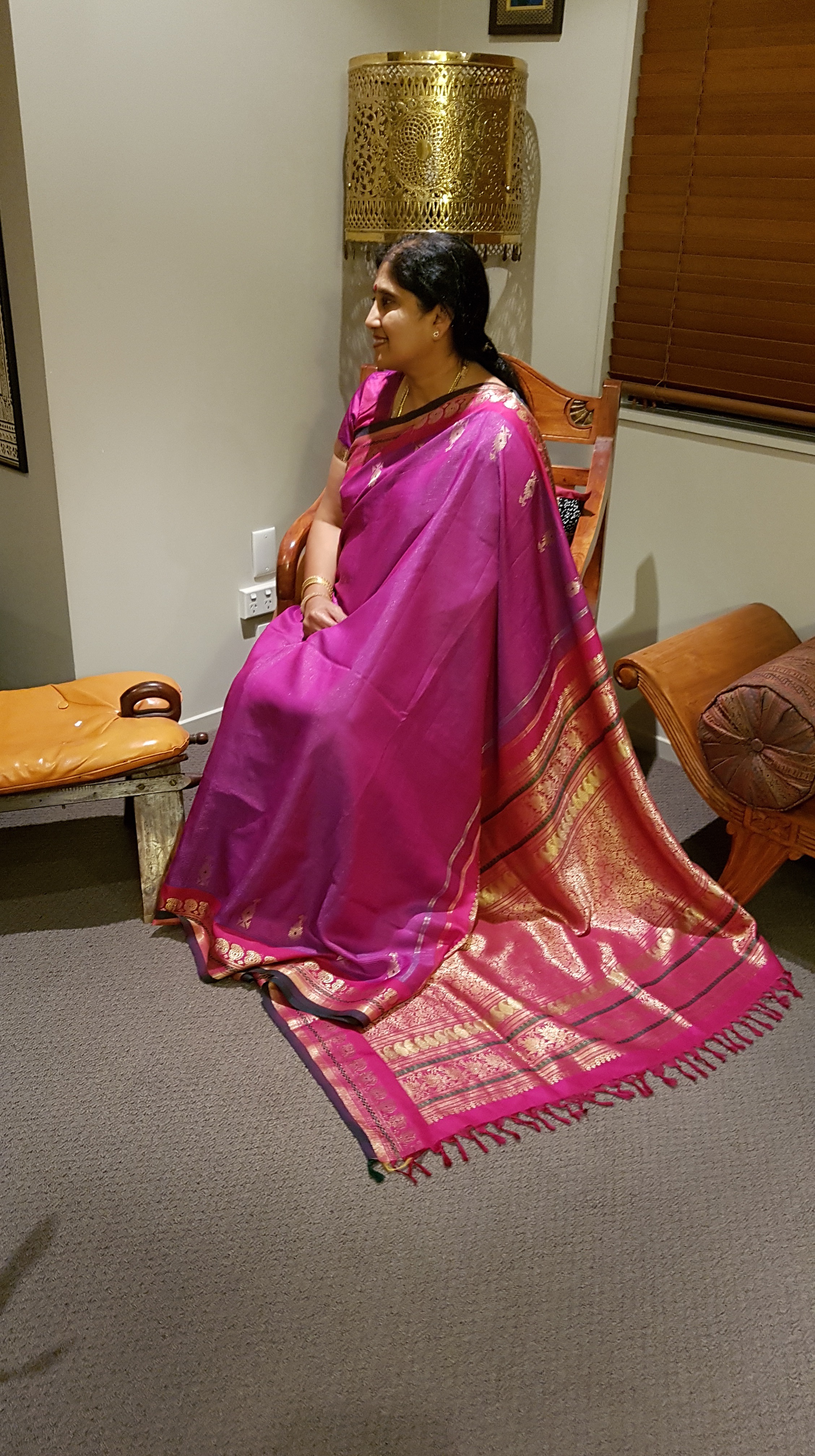
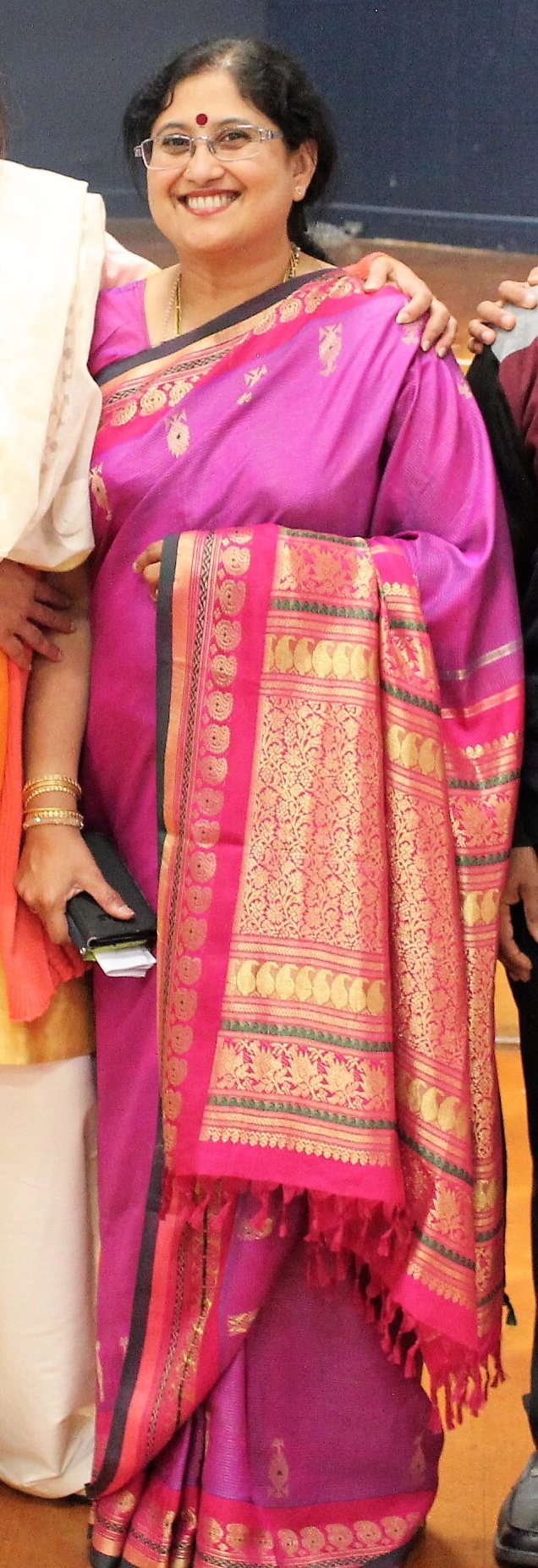
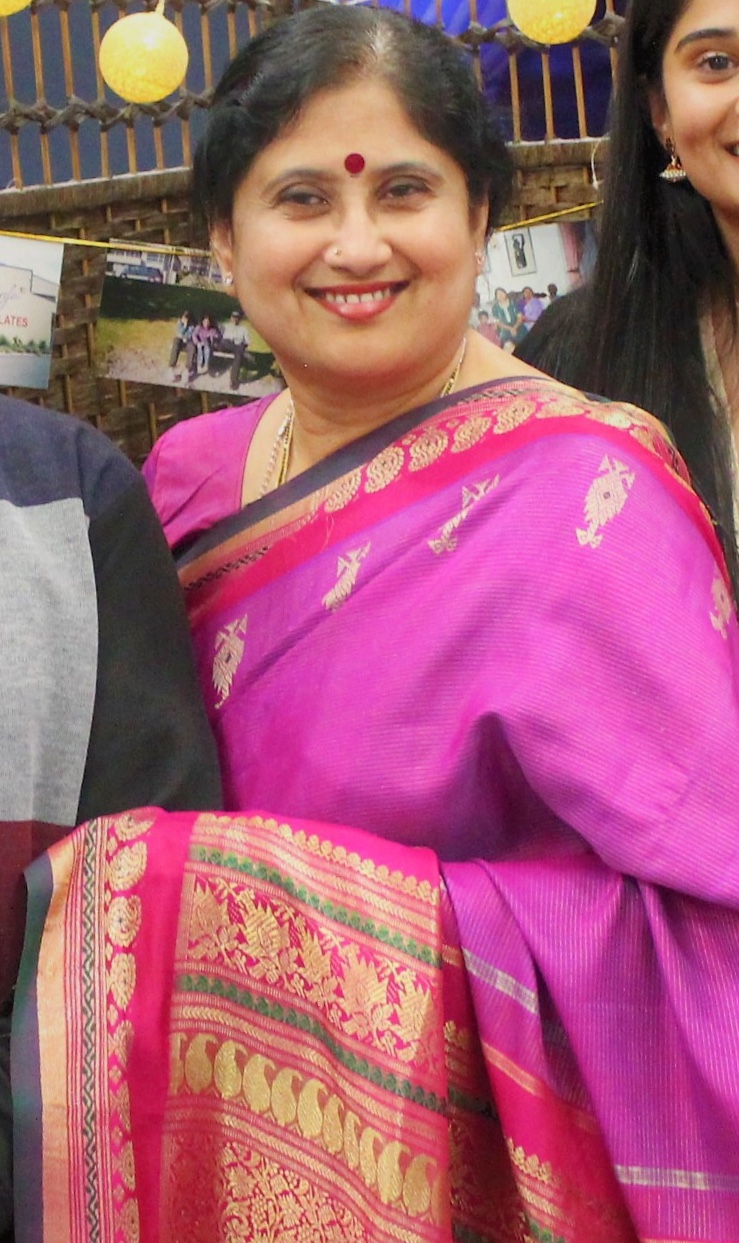
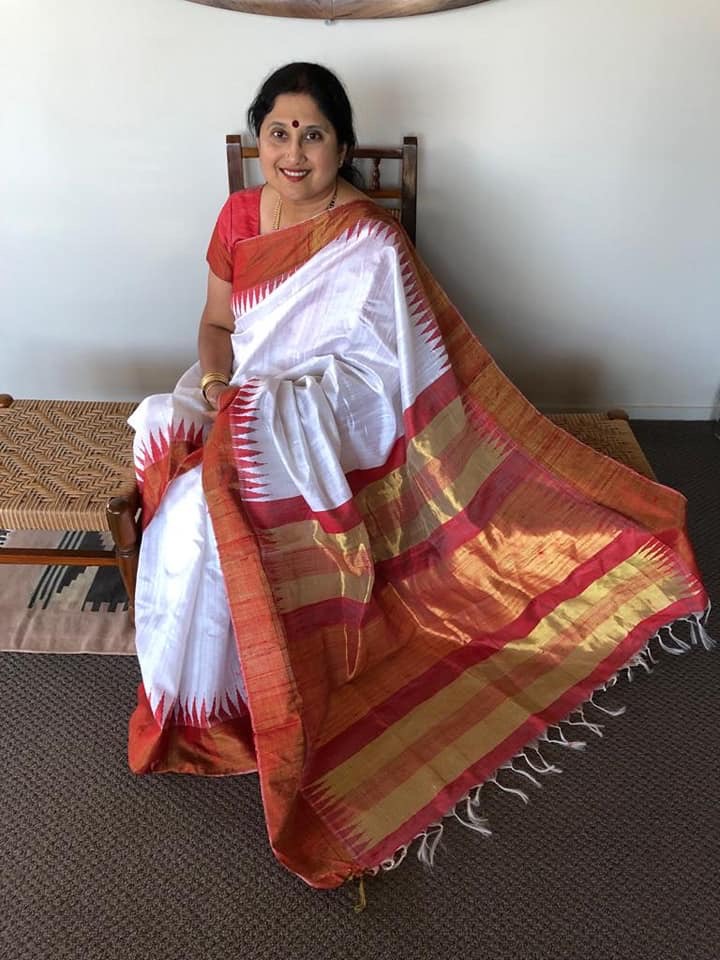
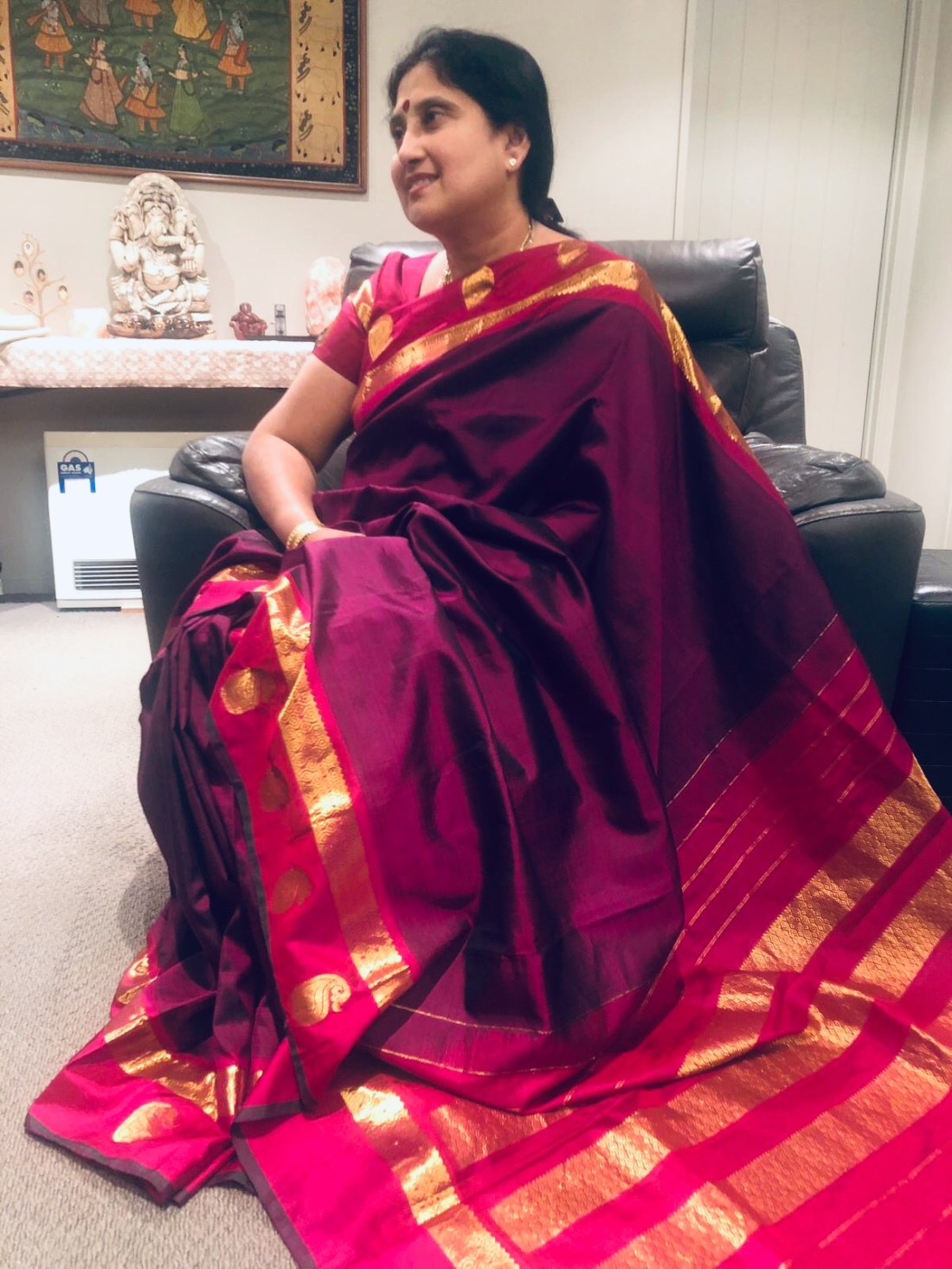
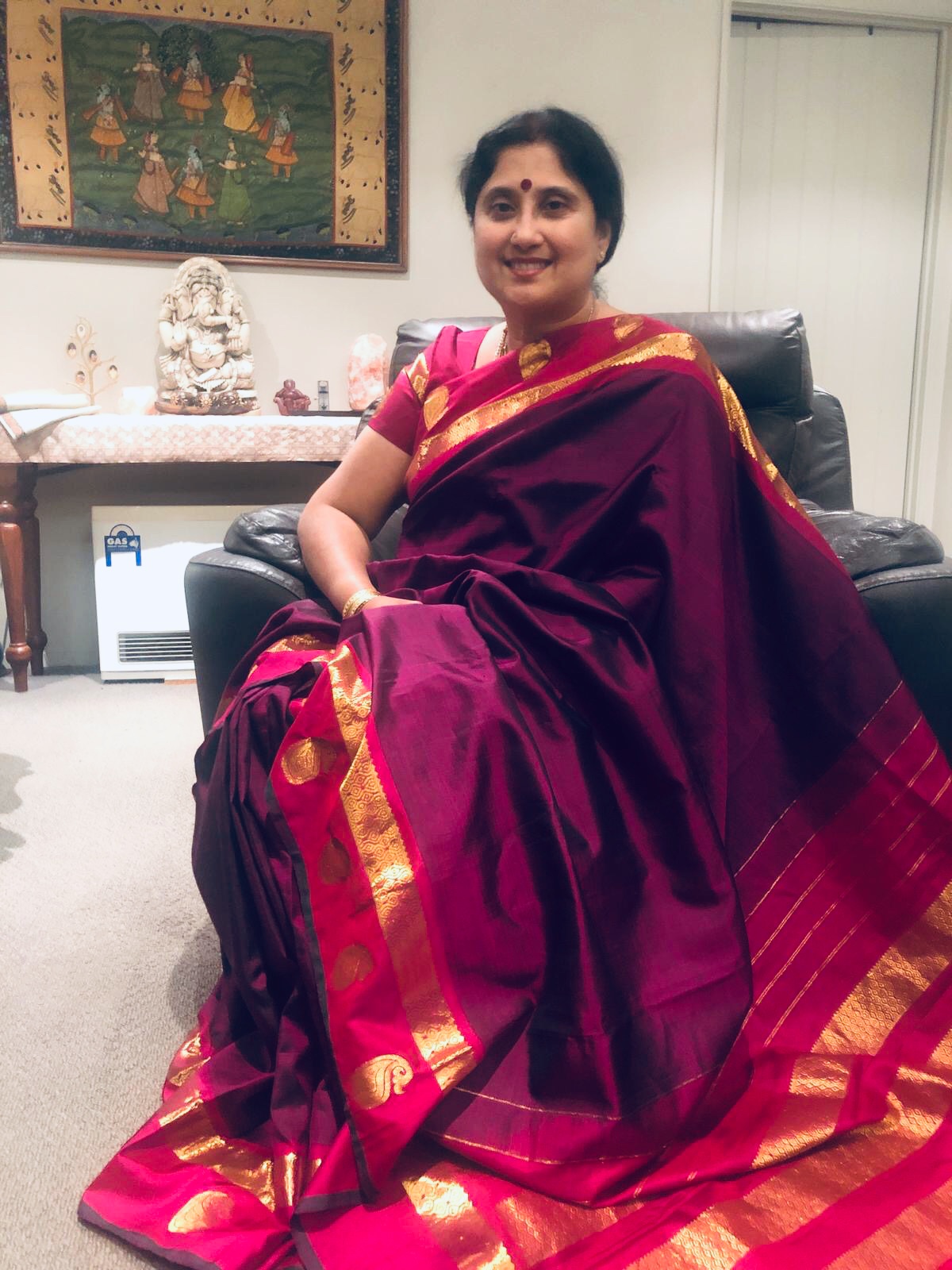
Draped in my reception 28+ year old Kanjivaram shocking pink and gold lined Saree with purplish pink green pallu and border, with mangoes, flowers, flowered buttis. Feeling like a Princess myself celebrating my husband’s surprise special birthday party, more so, extremely proud of my very own home grown feisty Disney Princess(es).

 Bavani’s Happy Place